Dermatology eCOA for CROs: Photos, Itch Diaries, and Scale
Direct answer
CROs running dermatology trials should choose eCOA that holds investigator scores, patient itch and quality-of-life diaries, and lesion photos in one workflow tied to the same visit. Because CROs run many sponsor studies at once, reusable instrument builds, clear licensing status, and in-house configuration matter as much as features.
Why is dermatology eCOA different for a CRO?
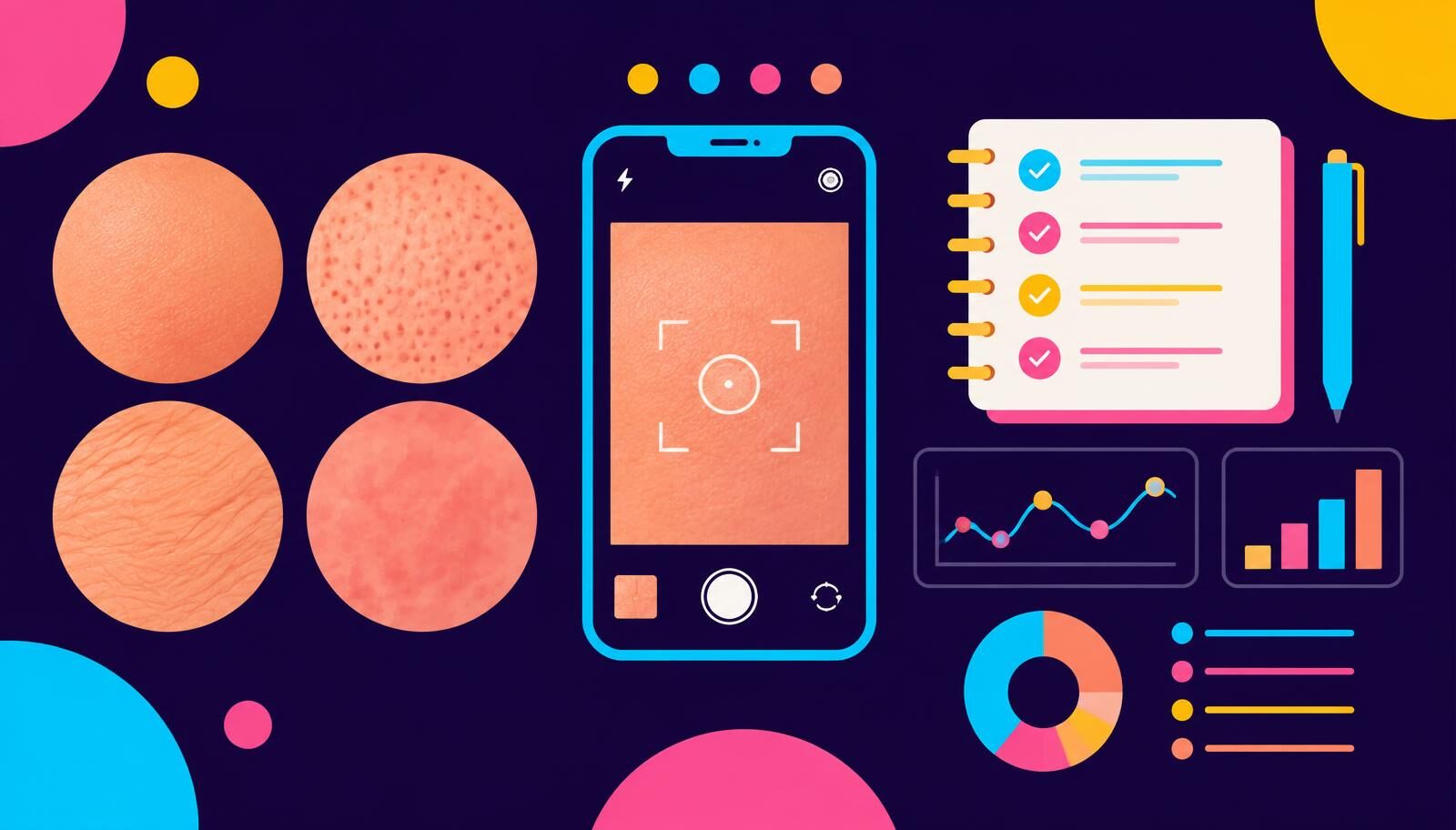
Dermatology studies combine three data types: investigator grading, patient-reported symptoms, and photographic documentation of visible disease. A dermatology-ready eCOA platform holds all three in one workflow, tied to the same visit and timepoint, with traceability for each.
For a sponsor, that is a single-study requirement. For a CRO, it repeats across a portfolio of atopic dermatitis, psoriasis, hidradenitis suppurativa, vitiligo, and alopecia studies, each with a different sponsor, protocol, and instrument list. The CRO's goal is to deliver the same quality on every study without rebuilding everything from scratch.
Which instruments show up most often?
Most dermatology protocols draw from a familiar set of measures:
Investigator scores
EASI, PASI, IGA, BSA, and SCORAD, usually completed by the investigator on a site device at each visit. One published atopic dermatitis protocol had investigators complete EASI, IGA, BSA, and SCORAD on the eCOA device, while patients completed pruritus NRS before those assessments.
Patient diaries
The Itch NRS is an 11-point scale for worst itch over the past 24 hours, often paired with skin pain and sleep-loss items in a daily diary.
Quality of life
The Dermatology Life Quality Index (DLQI) appears in many programs, often deployed alongside the Worst Itch NRS.
Safety and mental health screens
Some dermatology protocols also require depression and suicidality instruments.
How should eCOA handle lesion photography?
Photos are central to dermatology endpoints and to rater consistency. Look for:
Photo capture inside the assessment
The camera activates with instructions when a question requires an image, and the photo links to the patient's assessment.
Standardization
Anatomical consistency, quality checks, and audit trails linking each image to visit, device, and administrator.
Separate photo consent
Some protocols collect photographs only from participants who give separate consent and take extra care with facial images. eCOA should respect that flag so non-consenting participants never see a photo prompt.
Reference images for raters
Embedding reference images in EASI or PASI forms helps raters at every site grade against the same standard.
What do CROs need that sponsors often do not?
Reusable builds
A global instrument library to store and reuse standardized builds and translations, so teams can build once and deploy everywhere.
Licensing visibility
A central library where instruments, translations, versions, and license status are visible and can be added to new studies. Starting licensing early, even at CRO contracting, keeps source files ready when the eCOA build starts.
In-house configuration
A flexible form designer for VAS and NRS items lets CRO data management teams configure itch, pain, and quality-of-life instruments without a vendor programmer for every amendment.
Portfolio oversight
Compliance and rater-variability metrics that roll up across studies, so the CRO can spot a struggling site before a sponsor does.
Sponsor-friendly handoff
Clean exports and documentation that fit each sponsor's EDC and data standards.
Comparing eCOA platforms for dermatology CROs
| Vendor | Known for | Fit for CRO and dermatology trials |
|---|---|---|
| Curebase | Structured eCOA, eConsent, and EDC on one data model | A strong fit for CROs that want itch diaries, investigator scores, photo consent, and lesion photos in one connected record, with reusable components and hands-on support across sponsor studies |
| Clario | eCOA with photo and audio endpoint capture on a single device, plus imaging analysis | A fit for CROs supporting large global programs where imaging review is central |
| YPrime | eCOA supporting PASI, EASI, IGA, DLQI, NRS, body maps, and photographic assessment | A fit for CROs that want dermatology-specific workflows and rater oversight |
| Medidata | eCOA with a global instrument library connected to Rave EDC | A fit when sponsors already standardize on Rave |
| Veeva | eCOA in the Veeva Development Cloud with a central instrument library and license status visibility | A fit for CROs working with sponsors on Vault EDC |
What should CROs ask eCOA vendors?
- Which dermatology instruments are already built, licensed, and translated?
- Can we reuse a validated EASI or Itch NRS build across sponsors without revalidation?
- How do photo capture, quality checks, and separate photo consent work together?
- Can our data managers configure diaries and amendments without vendor programming?
- What portfolio-level compliance and rater metrics can we see?
- How do exports map to each sponsor's EDC and standards?
Where does Curebase fit for dermatology CROs?
Curebase eCOA runs on the same platform as Curebase eConsent and EDC. For a CRO running several dermatology studies, that means patient diaries, investigator scores, consent choices about photos, and image uploads share one record and one audit trail. Reusable study components help teams launch the next sponsor study faster, and Curebase's team supports site and participant onboarding so CRO staff can focus on oversight.
Frequently asked questions
What is the best eCOA for CROs running dermatology trials?
The best fit links investigator scores, patient diaries, and lesion photos in one workflow, and lets the CRO reuse validated builds across sponsors. Compare vendors on instrument coverage, photo handling, and configuration effort.
Which eCOA instruments are common in dermatology trials?
Common measures include EASI, PASI, IGA, BSA, and SCORAD for investigators, plus the Itch NRS, skin pain, sleep loss, and DLQI for patients. Some protocols add depression and suicidality screens.
How does eCOA capture lesion photos?
Many platforms trigger the camera within the assessment, link the photo to the visit, and apply quality checks. Images are then de-identified and routed for review.
Do dermatology trials need separate consent for photos?
Often, yes. Some protocols photograph only participants who give separate consent, so the eCOA should hide photo prompts for anyone who declines.
How can CROs speed up dermatology eCOA builds?
Start instrument licensing and translations early, reuse validated builds from a central library, and choose a platform that lets data managers configure diaries and amendments in-house.
Does Curebase offer eCOA for dermatology CROs?
Yes. Curebase eCOA connects with Curebase eConsent and EDC, so CROs can manage diaries, scores, photo consent, and images in one platform.