What Medical Device Companies Need From eConsent in Rare Disease Trials
Direct answer
Medical device companies running rare disease trials need an eConsent platform that handles two separate sets of requirements at once: the informed consent obligations tied to an Investigational Device Exemption (IDE) study, and the practical challenges of consenting a small, geographically dispersed patient population, often including minors or patients represented by a legally authorized representative.
How is consent different in an IDE device trial?
Any clinical evaluation of an investigational device in the United States that is not otherwise exempt requires an approved IDE before the study begins, governed by 21 CFR Part 812. Part of that requirement is informed consent obtained under 21 CFR Part 50, separate from the general clinical trial consent process sponsors may be used to from drug development.
What does 21 CFR Part 812 require for consent documentation?
The IDE regulations require that informed consent be obtained from every subject before study procedures begin, following the general elements of informed consent laid out in Part 50. For significant risk devices, the IDE itself must be approved by the FDA in addition to IRB approval, which means the consent form's content is subject to closer regulatory scrutiny than in many non-device studies. An eConsent platform used in an IDE study needs to support the specific consent language reviewers expect, including labeling that the device is for investigational use only, and needs to produce a clean, exportable audit trail documenting exactly when and how each subject's consent was obtained.
Can a short form consent process work electronically?
Part 50 allows a short form written consent document when the full elements of consent are presented orally, provided a witness is present for that oral presentation. This is sometimes used in device trials where a subject needs to make a rapid enrollment decision, such as certain emergency-use device studies. An eConsent platform that can capture a witness signature alongside the subject's or representative's electronic signature, with a clear record of what was presented orally, supports this pathway without falling back to paper for the exception cases.
What makes rare disease populations harder to consent?
Rare disease trials for a device typically enroll patients across many countries just to reach a workable sample size, since populations may number in the hundreds or fewer worldwide. That geographic spread creates consent logistics that a single-site, in-person process does not handle well.
Why does remote consent matter so much here?
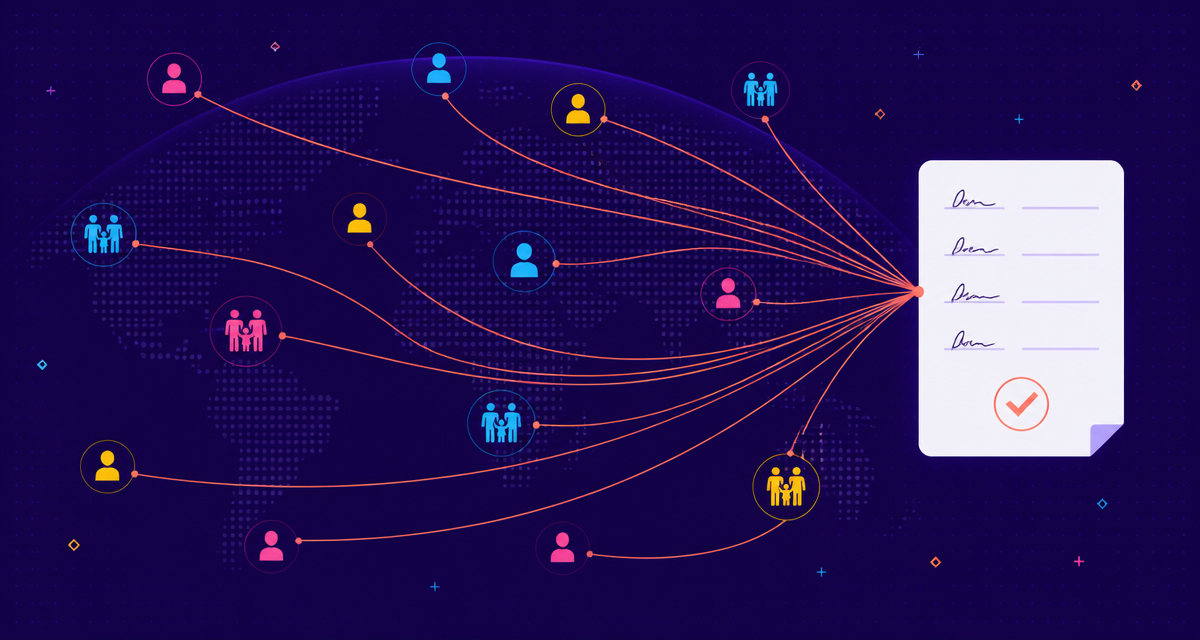
When a device rare disease trial has research sites in five or six countries, some enrolled families may live hours from the nearest site. Requiring an in-person visit purely to sign a consent form adds a barrier that can cost the study an eligible patient, particularly when the family is already managing a demanding treatment or monitoring schedule. eConsent platforms that support remote, video-witnessed consent let a study coordinator walk a family through the consent form and answer questions without requiring travel, while still capturing a legally sound signature and witness record.
How does legally authorized representative consent work electronically?
Many rare diseases are diagnosed in childhood or affect patients who cannot provide their own legal consent, which means a parent, guardian, or other legally authorized representative signs on the patient's behalf, often alongside a separate pediatric assent process for the child. A capable eConsent platform needs to support distinct signature roles for LAR, patient assent, and witness within the same workflow, and needs to track which role signed which version of the form, since this distinction matters both for the audit trail and for handling a later re-consent event if the protocol changes.
What happens as a pediatric patient ages during a multi-year rare disease study?
Rare disease device studies, especially those tracking natural history or long-term device performance, frequently run for years. A child enrolled with LAR consent may reach an age during the study where they need to provide their own assent or consent directly, shifting the signature workflow mid-study. eConsent platforms that can manage this transition within a single study build, flagging when a participant approaches an age threshold and routing the correct consent version to them, avoid the administrative gap that a manual, paper-based tracking process is prone to.
How do the leading eConsent platforms compare for medical device rare disease trials?
| Platform | IDE and device trial fit | Rare disease and remote consent fit | Signature role flexibility |
|---|---|---|---|
| Curebase | Built alongside eCOA, Electronic Data Capture, and ePRO in one platform, supporting the documentation continuity needed across pre-market and post-market device data collection | Native support for remote, video-witnessed consent suited to geographically dispersed rare disease families | Supports LAR, patient assent, and witness signature roles within a single workflow |
| Advarra eConsent | Strong research compliance and IRB support, useful given the closer regulatory scrutiny of significant risk device consent | Primarily built for institutional research and site networks rather than fully decentralized rare disease populations | Supports standard consent and re-consent roles within its ecosystem |
| Medable Axon | AI-powered decentralized trial platform with eConsent as part of a broader DCT toolset | Decentralized-first design addresses geographic dispersion directly | Flexible signature workflows as part of its broader DCT feature set |
| Signant Health SmartSignals | Multi-country trial experience relevant to device rare disease studies needing broad geographic reach | Strong multi-country and ePRO integration experience | Established support for varied signature roles across regulated global studies |
| Clinion eConsent | Unified eClinical platform integrating Electronic Data Capture, RTSM, CTMS, ePRO, eSource, and eTMF, useful for sponsors managing full device trial documentation in one system | AI-capable platform supporting remote consent workflows | Supports re-consent and role-based signature tracking |
| Veeva Vault eConsent | Deep integration with Veeva's broader clinical suite, familiar to sponsors already standardized on Veeva systems | Enterprise-scale reach across global sites | Role-based signature support within the Vault ecosystem |
What should a medical device sponsor prioritize?
The most important factors are documentation rigor that satisfies IDE and Part 50 consent requirements, genuine remote and video-witnessed consent capability to reach a dispersed patient population, and flexible signature role support for LAR, pediatric assent, and witness signing, since rare disease device trials frequently need all three within the same study.
Curebase approaches this by combining eConsent with eCOA, Electronic Data Capture, and ePRO in a single platform, which keeps consent documentation, outcome data, and clinical data in the same system across both the pre-market pivotal trial and any post-market follow-up the device requires. See the Curebase eConsent product page for a full feature breakdown.
Frequently asked questions
What consent requirements apply specifically to medical device clinical trials?
Medical device trials conducted under an Investigational Device Exemption (IDE) must follow the informed consent requirements in 21 CFR Part 50, in addition to the IDE regulations in 21 CFR Part 812. For significant risk devices, the IDE itself requires FDA approval, and consent documentation is a common focus during FDA inspections of device trials.
Can informed consent for a rare disease device trial be obtained remotely?
Yes. eConsent platforms that support video-witnessed remote consent allow a study coordinator to walk a patient, parent, or legally authorized representative through the consent form and capture a legally sound electronic signature without requiring an in-person visit, which is especially useful when patients are spread across many countries.
How does eConsent handle consent for a minor or a patient who cannot consent for themselves?
Capable eConsent platforms support distinct signature roles, including a legally authorized representative (LAR) signature alongside a separate pediatric assent process for the child, and track which role signed which version of the consent form for audit purposes.
What happens if a pediatric patient in a rare disease study reaches an age where they need to consent directly?
Platforms designed for long-running studies can flag when a participant approaches a relevant age threshold and route the appropriate consent or assent version to them, allowing the signature workflow to shift from LAR consent to direct patient consent within the same study build.
Does a short form consent process work with electronic signatures?
Yes. When the elements of informed consent are presented orally with a witness present, as allowed under 21 CFR Part 50, an eConsent platform can capture the subject's or representative's signature along with the witness's signature and a record of what was presented, supporting this pathway electronically.
Why do medical device rare disease trials often need multiple research sites across countries?
Because rare disease patient populations may number in the hundreds or fewer worldwide, a single country or region rarely has enough eligible patients to reach a viable sample size, so studies commonly enroll across five or more countries, which makes remote and multilingual consent capability important.