R2GConnect Innovation
From Pre-Screen to Signature: A Quick Look at the Curebase Platform
Clinical trial teams have no shortage of tools. The harder problem is getting those tools to work together, so data flows cleanly, sites aren't stuck re-entering information, and participants actually understand what they're agreeing to.
That was the backdrop for R2GConnect Innovation: Clinical Trial Execution & Operations Tools, where a group of clinical research technology companies each had about three minutes to show what they do. Curebase Chief Commercial Officer Scott Dixon used his time to explain the Curebase approach and walk through a live eConsent demo.
One platform, one database
Curebase started about eight years ago as a virtual CRO with technology in the background. Today, the focus is almost entirely on that technology.
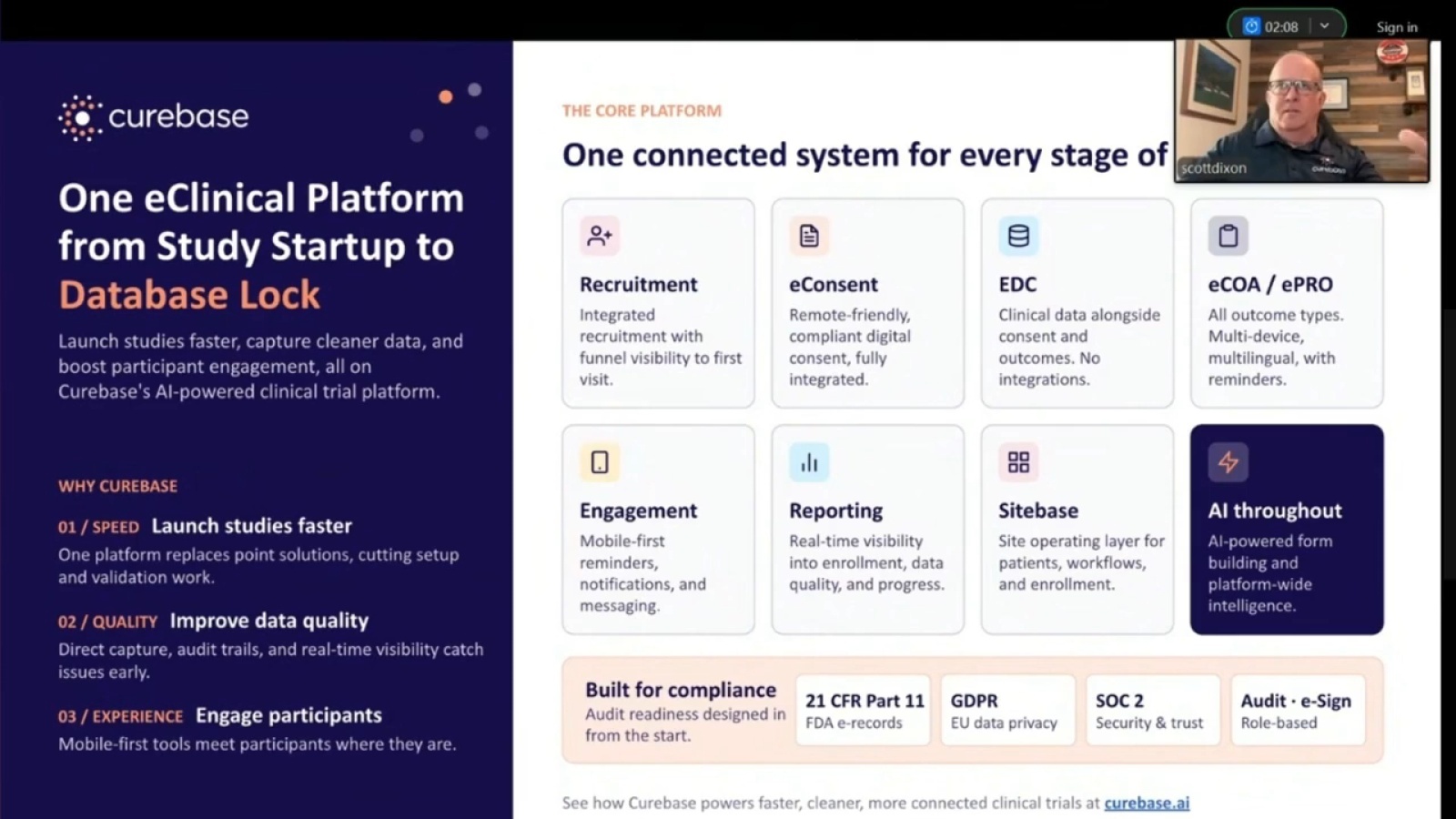
Many platforms describe themselves as "integrated." Curebase is built on a single database that supports the full study:
- Pre-screening and recruitment
- eConsent
- EDC
- eCOA and ePRO
- Participant engagement
- Reporting
Because everything runs on the same data, teams don't have to stitch systems together or reconcile records between vendors. Curebase supports global studies and has reached about five million patients from pre-screening through eConsent and eCOA.
eConsent built for understanding
Consent is often a participant's first real interaction with a study. It should be clear, not rushed.
In the demo, Scott showed how Curebase eConsent supports that:
- Remote or on-site: Many sites send the consent ahead of the first visit, so participants arrive with questions and the in-person conversation takes less time.
- Multimedia: Video, images, and expandable sections help explain complex study details.
- An AI assistant, reviewed by the IRB: Participants can ask questions like "Tell me more about the screening visit," and the assistant opens the relevant sections and explains them in plain language.
- Full audit trail: Time on page, time spent on questions, and requests for more information are all tracked.
- Flexible signatures and languages: Single or dual signature countersigns, in any language, with support for country-specific rules where reading and understanding are allowed but physical signatures are not.
Built for what comes next
Behind the scenes, Curebase is designed with AI at its core and uses data standards such as USDM across the trial lifecycle. It also supports a targeted approach to source data verification, with triggers tied to adverse events and data flows, so teams can focus review where it matters most.
Scott also previewed Sitebase, launching at SCRS Global. Sitebase gives research sites their own tools for patient lists, recruitment, eISF, CTMS, and financials, on the same database sponsors use.
Watch the full pitch
The full pitch runs just over three minutes and includes the eConsent demo. Watch it above.
Want to see how Curebase could support your next study?